• About Curate Mike
  • Wandering Wonderings

curacy

~ thoughts from the desert

curacy

Category Archives: Journey

The Music of God

20 Saturday May 2017

Posted by CurateMike in All, Journey

≈ 2 Comments

Tags

Christianity, Church, God, Life, music, orthodoxy, poetry, religion, spirituality

Inspired by the metaphor of another writer…

MusicWhen I first heard the music of God, I was tone deaf.  Later in life, circumstances caused me to listen again.  This time, something in the music caught my ear…I continued listening.  Once I finally gave myself over to it, I was captivated by its beauty, goodness, and truth.  It spoke to the depths of my soul in a way that only music can.  I played it over and over.  I began to study the sheet music and to sing along.  I longed for others to hear it, to sing, too.

After awhile, I became a Pastor so that I might help others hear for the first time or to hear more deeply.

One day, I noticed a note out of place.  It was a small thing, one note in a grand score, but there it was.  Then, I began to hear other wrong notes. And, parts of the arrangement itself seemed somehow off.  I was becoming aware of the very faint echo of a more complete orchestration playing in my soul.

I sought silence in my life to try to hear more clearly what was so faint within.  The occasional mis-played note and the sections of poor arrangement were becoming an irritant in the music I once loved.  How could this be?

I joined with a group of pastors who were studying the Catholic mystics.  The music was set aright; beauty, goodness, and truth returned.  But over time, the music that continued to play within grew louder and more distinct.  The music I was hearing with my pastor friends was still off in some way I did not understand…it did not harmonize with the music within.  What I did know, however, was that I could no longer be content with the music surrounding me, I had to hear the music within.

When I first attended a Christian Orthodox Church, I knew immediately that I was hearing the music I was longing to hear, the music that had once been so faint within me.  I’ve been listening to it for several years now, letting it wash over me and permeate my heart and mind.  Slowly, I am hearing nuances previously unnoticed.  I try to hum along, but my voice seems croaked in comparison to the glory of the music.  I look forward to the day when I might sing along with the voices of the angels and the saints.  I have a long way to go.

It has been said that God is unknowable, but you have to know Him to know that.  This is the fundamental Christian paradox.

To know an unknowable God, to learn to sing along with the fullness of the music of God, to fully partake of the divine nature of the Source of the music…that will take an eternity.

Come and see…and hear the music.

The Role of Tradition

25 Tuesday Oct 2016

Posted by CurateMike in Church, Journey, Uncategorized

≈ 2 Comments

Tags

Church, Jesus, Reformers, Tradition

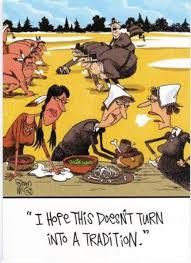
My job recently had me in a hotel at the location of “the big game” of the college football weekend.  Both schools have a long tradition in college football.  Both schools are ranked in the Top 10. Both schools are undefeated.  This game has implications for the images-1eventual college national championship.

The town is full of supporters from both schools and there is quite a palpable energy in everyone I meet who is associated with either school.  In each camp there is a shared experience among alumni that transcends age, gender, race, and ethnicity.  Strangers become friends as they share in something bigger than they each are.

My Dad attended one of the schools, so I have a favorite in the game; however, I am not really vested in the game.  In fact, I’m quite outside of the experience of those around me, unable to really connect even were I to wear the team logo.  I am outside the experience because I never shared the experience of the traditions of my Dad’s school; I am not part of its history and its history is not in me.  I am not a continuation of the stories of the people who attended, the heroes and anti-heroes and just plain folk.  It is the shared experience of the tradition makes the community and the community passes on the traditions.

Every strong culture has its long-held traditions.  These cultures can be as diverse as ethnic groups, religious groups, colleges, military branches or units, and even gangs…each, if it is a strong community, has traditions that are kept by the community and passed on to willing participants by the community. One’s participation in the established cultural tradition is the way one becomes part of the community.

In 1943, C.S.Lewis published a book entitled The Abolition of Man in which he critiqued the English educational system breaking from passing on tradition.  He said:

[Previous generations of educators] did not cut men to some pattern they had chosen. They handed on what they had received: they initiated the young neophyte into the mystery of humanity which over-arched him and them alike. It was but old birds teaching young birds to fly.

Lewis’ point: without the educators “handing on what they had received,” our understanding of what it is to be human would diminish to the point abolishment.

In the 1970s, the Khmer Rouge took power in Cambodia and tried to remake the Cambodian culture with mass killings.  They instituted Zero Year in which they determined to destroy or discard all Cambodian tradition and begin anew (beginning with year zero) from scratch.  Like the communist re-education camps, their aim was to remake culture by abolishing the old.

The central pole in the Christian tent is that of our becoming.  We are to partake of God’s divine nature, to become one with Him as the Three, Father, Son and Spirit, are one.  An early saying of the Church was that we are becoming by Grace what God is by nature.  To be a Christian is not just to have a “personal relationship with Christ” but to become part of the body of Christ, which is the Church.  The Church must be a faithful keeper and transmitter of the tradition of the community.  To be part of this community and to experience its fullness, you must experience life within the community.  There is no other way to “become” like Christ.  From within our engagement with the Church, the Way, the Truth, and the Life is transmitted to us.

In western Protestant Christianity, tradition has gotten a bad rap.  I grew up in a small Midwestern town.  There was one “parochial” school, a Catholic elementary school.  Some of my friends had to eat fish on Fridays (this was in the days prior to Vatican II).  In my Protestant Church I learned about the heroes of the Reformation and how they rescued the faith from “those Catholics” who, among other things, held to tradition.

And yet, Protestant Churches have their own traditions.  Alter calls, the “sinners prayer,” Sunday worship as a song followed by a time of greeting then two more songs then a forty minute sermon and a closing song…all tradition.   We simply cannot “become” without tradition even if we have to reform them.

Now, imagine following Jesus around during His time of ministry.  Think of what you would have seen, learned, and experienced about what it was to live as a Christian.  Imagine seeing Jesus’ mother, Mary, to observe up close the day-to-day life of the one “highly favored” and chosen by God.  “Arghhh,” we might says we looked at our own lives, “that is what it looks like to live as a highly favored one of God!”  Imagine following Peter or Paul…wouldn’t you be immersed so much more in the ways of living a life of Christ than had they simply tossed you a book to read!

The cry of the Reformers was Sola Scriptura, Scripture alone.  And yet from Scripture alone the reformers, Luther, Zwingli, then Calvin, could not agree on a central dogma of Christianity: the Eucharist.  Something more than Scripture must be needed.

Scripture itself is a product of tradition and is foremost among the traditions.  Scripture we have today was finally determined because the Churches of the 300s were all generally reading the same writings.  In other words, the canon of Scripture we now have simply came from the Church leaders recognition that these were the traditional books being read.  And, the Church members agreed to keep reading them.

Now some will argue that Jesus was angered by tradition.  He is sometimes referred to as a rebel because He was no fan of some of the Jewish tradition of His day.  “Woe to you…hypocrites…” were His words to those who had created tradition in the name of religion that they might enhance their own power and stature.  But He also followed tradition, engaging in the manner of worship common during His time.

Jesus said, “I am the way, the truth, and the life.”  His life is the way of Christian life in as much as we are able to follow Him in our fallenness.  The Apostles received this life of the Father from Christ through the Spirit.  They who succeeded the Apostles passed on this way of life to the next generation (Paul: “I give to you what I received by tradition…”), and they to the next, to the next, to the next…down to us.  We inherit a way of life from within the Church: a community formed by Tradition, that keeps the Tradition, and passes on the Tradition.

Andrew Louth, in his book, Discerning the Mystery, suggest this:

…ultimately the tradition of the Church is the Spirit, that what is passed on from age to age in the bosom of the Church is the Spirit, making us sons in the Son, enabling us to call on the Father, and thus share in the communion of the Trinity.

By distancing ourselves from Tradition we have lost our way.  There are tens of thousands of Christian denominations in the world, each claiming to have the right interpretation of Scripture.  We are not the “one, holy, apostolic church” of our early creed and I don’t think we can reformulate the meaning into a spiritual oneness rather than a physical oneness.  I believe Jesus meant what He said when He told us we were one.  Paul, too, said we were to be one Church, one body of Christ.  How can we hope to show others the truth of God if we cannot settle on it ourselves.

From Tevye (Fiddler on the Roof):

But here, in our little village of Anatevka, you might say every one of us is a fiddler on the roof trying to scratch out a pleasant, simple tune without breaking his neck. It isn’t easy. You may ask ‘Why do we stay up there if it’s so dangerous?’ Well, we stay because Anatevka is our home. And how do we keep our balance? That I can tell you in one word: tradition! 

Tens of thousands of denominations, the Church is indeed losing her balance.  What is the path forward?  Tevye says it: Holy Tradition.  That which was received by the Apostles and passed on is still in practice today.  Come home and see.

If you want to read more, you might enjoy these articles:

Scripture and Tradition

Teaching the Tradition

Land of the Free

10 Wednesday Aug 2016

Posted by CurateMike in Journey, Uncategorized

≈ 6 Comments

O! say does that star-spangled banner yet waveimage

O’er the land of the free and the home of the brave?
“Star Spangled Banner”

As a country, we just celebrated our 240th anniversary. And, during these centuries, as a country we have upheld personal freedom as a primary value.

As a “child of the 60’s,” I remember the freedom movements driven by our desire to throw off authority and live more freely (“Tune in, turn on, and drop out”; “Don’t trust anyone over 30”). In our country today, we are seeing the logical extension of that youthful drive for freedom in that not only can one marry regardless of gender, but one can now self-determine one’s gender.

From that beginning in my formative years, personal freedom has remained a big part of my life. Growing up believing I could be anything I wanted to be, I have had four different “career” types of jobs. I have lived in nine different states. I even eschewed having kids believing they would only inhibit my personal freedom.

The Church herself has not been exempt from our human drive for this kind of freedom. In the 11th century, the Patriarch of Rome broke away from the other Patriarchs of the One Holy, Catholic, and Apostolic Church over a disagreement regarding the nature of the Holy Spirit. Thus, the Great Schism separated what we now call the Roman Catholic and Eastern Orthodox Churches. Five hundred years later, Luther and Zwingli sought additional freedoms and turned their backs on the authority of Rome and the Traditions of the both the Roman Church and the Eastern Orthodox Church, and Protestantism was born. Now, there are thousands of denominations within Protestantism.

No Freedom in Freedom
Jazz great Branford Marsalis has been quoted as saying about playing Jazz: “You don’t play what you feel. There’s only freedom in structure, my man. There’s no freedom in freedom.”

As I look back over my life, now being closer to the end than the beginning, I can see the effect of my avoiding some of the traditional structure of life and trying to find “freedom in freedom.” As I have flittered about trying this and that, I now find I have few generational “family traditions” and no one to pass them on to. I have no life-long friends. What I had always thought was “personal freedom” now appears to me more like self-induced slavery.

I see a parallel in my journey with God, as well. I worked for a time as a pastor of a small, but mainstream Protestant denomination. I felt as though I was working hard for God, but my relationship with Him was stagnated. After a time I found myself in physical and emotional anguish, longing for a deeper relationship with Him. I didn’t know how to pursue such a relationship. I knew to engage in some of the ancient practices, such as fasting, but I was unsure how. For example, I knew it is biblically important to fast, but I often wondered how much fasting was enough. Was it just up to me to decide how much and when to fast? I began to read various authors, but I couldn’t understand what made this author or that author the expert on a fasting rule? Some simply said to “let the the Holy Spirit guide you.” I discovered that the “voice of the Spirit” can sound an awful lot like mine!

Then I found others with a similar longing for God. Before long I was deeply engaged in the Protestant spiritual formation and spiritual direction movements. These were–and still are–wonderful movements based on practices of the ancient Church. Their intent is to help participants move toward a deeper relationship with Christ.

As part of this work, I was meeting regularly with a couple of groups of local pastors and lay leaders from various Protestant denominations. We were trying to develop the path toward a deeper relationship with God that we could offer to churches. Reading books, developing spiritual community, meetings with a spiritual director, a deepening prayer life, engaging in the spiritual disciplines, and spiritual retreats were all part of the path we developed.

At the same time I became trained as a Spiritual Director. I would meet one-on-one with others who were seeking a deeper relationship with God. I would offer them the path my colleagues and I were discovering. I was helping to lead spiritual retreats across the country, introducing others to this path we had found.

Wandering in a Desert
After a few years, my work with these groups and my attempts to spiritually guide others left me feeling even more lost. In my research, I discovered that a number of organizations were publishing books on the path they had discovered. It felt just like the rise of “denominationalism” all over again! Ours was just one more path among many.

I began to wonder whether the freedom to worship God as I wanted was not freedom at all. I found Marsalis’ words true; there was no freedom in my personal freedom to follow the worship path I had found with others. There were too many choices, too many authors, too many individual ways to worship. What made me think my way was God’s way?

Worse yet, I was discovering that I could no longer give guidance to those I was supposed to be directing toward a deeper relationship with God…all I could offer was the smorgasbord of choices I had found myself. Without knowing why, I began to feel like I was operating outside of the Church. You know the church, that Spirit-filled body of Christ Paul talks about. Did it even exist anymore in that sense, I wondered.

I stopped giving spiritual guidance. I stopped leading retreats. I stopped blogging.

Old Testament and New Worship
Our God is a God of order and structure. Reading through the first five books of the Bible (the Pentateuch), one easily sees that God gave the Jews a structure for worship. In these books He is attentive to the smallest detail in the order and manner of worship of Him. The Jews were not free to worship Him as they saw fit. God new there was no freedom in freedom, so He gave them plenty of structure.

On that first Sunday morning after Pentecost when the Holy Spirit was given to the Church, the Apostles and earliest Church members did not create a worship experience from a blank page. After all, they were Jews. Instead, they began to modify the structured worship of their Jewish tradition based on God’s revelation of Jesus, the God-man. Psalms were still sung. Scripture was still read and interpreted, but from the perspective of the revealed Christ. Sacrifice still continued, but no longer animal sacrifice. Instead, they partook of the sacrifice of Jesus, the Lamb of God: the Eucharist. In short, they maintained the long traditions of the original Jewish “Church” but now modified and interpreted through the revelation of Christ.

The Ancient Path
Thus says the Lord: “Stand in the ways and see, and ask about the eternal pathways of the Lord. See what the good way is and walk in it. Here you will find purification for your souls.” (Jeremiah 6:16)

Over time, the Church, that Spirit-filled body of Christ made up of monastics, ordained clergy, and laity, have been led by God onto the path toward oneness with Him. And that path is a way life. It is a life of prayer, fasting, and alms giving, a life of participating in the sacraments of the Church, and a life of liturgical worship. It is not a path on which one picks and chooses as one individually desires; there is no freedom in that kind of freedom. Rather, as Marsalis suggests, it is a path of freedom within structure, a structure provided by 2000 years of the Spirit-indwelled Church.

After years of searching, I have finally found freedom in worship. It came not from pursuing my own path to communion with God; rather, it came from beginning to give up my personal freedom and worshipping God from within the structure of the “One, Holy, Catholic, and Apostolic Church,” as we say in the Nicene Creed. No longer do I need to try and decide how I think is best to worship God.

It is a very new path for me. I’ve only been on it for a few years. I still do not give spiritual guidance. I still do not lead retreats.  But, I may blog a little if only, and this has always been the primary reason for this blog, to help me think.


The Way of Christ: Bearing a Little Shame and Finding Christ’s Joy

07 Wednesday Oct 2015

Posted by CurateMike in All, Journey

≈ 3 Comments

Tags

God, Humiliation, Jesus, Shame

Wretched man that I am! Who will save me from this body of death?
–St Paul

I have been on this earth for 6 decades. I just experienced a recent job change and move to a new state—another wearying “new beginning.” It caused me to reflect deeply on my life over the period of many months. In times of past reflection, I have always remembered the things I have accomplished and the adventures I have had. The nature of this change caused me to reflect on the person that I am. Images began to come into my mind, images would not stop—and they linger still—faces of the people I have hurt in no small way because of my radical self-centeredness. Some names I know, some I no longer remember or never knew. The overriding image in my mind is that of my life as a boat moving through a narrow canal, the wake of my life swamping all who are near the shore.

It is a remarkably painful image, that boat. During some late nights I wonder how I can continue to bear it. I see faces from my past as the waves of my life roll over them. I want to beg them for forgiveness. I have deeply hurt these people.. I want to hide myself from the world. I feel so deeply guilty for what I have done, but the guilt is familiar. What is new to me is that I have begun to feel deeply, deeply ashamed of who I am: a wretched man.

Jesus ‘…endured the cross, despising the shame…’

St. Paul says that Jesus “…endured the cross, despising the shame…” (Hebrews 12:1-3). Jesus unjustly endured the humiliation and shame of a criminal’s death, which He didn’t deserve. The Way of Christ for me, therefore, is the way of bearing the shame of who I am: a distorted human who deserves the cross of death and eternity in hell…and I must admit that fact to the God whom I love. It is the shame that I deserve and the cross of pain I must bear daily. And it puts me in the Way of Jesus, the path of salvation.

But, bearing my cross is not living a life of despair, or so I am learning. In the midst of the pain of my shame before God, a curious thing is beginning to happen. A very tiny point of light is appearing amidst the grayness of my shame. When I allow it to do so, that tiniest pinpoint of light illuminates those around me in such a way that I cannot help but love them and pray for them; they are me and I am them. Words fail to explain this mystery; perhaps the prayer of St. Nikolai Velimirovic will help: “For all the history of mankind from Adam to me, I repent; for all history is in my blood. For I am in Adam and Adam is in me.”

Most importantly, in my deep shame and pain I am finding budding joy. Jesus, “…for the JOY set before Him endured the cross, despising the shame…” Joy, the same joy of Christ given to you by Him (John 15:11) comes to you only through bearing your cross of shame and pain. The joy of Christ out of the pain of my cross. It is a mystery to me.

This is the Way of Jesus. You must face yourself and bear the pain of shame for your wretchedness to experience the joy of Christ. Four considerations:

  • Shame can be painful beyond your capacity to bear it. Pray that the Spirit will reveal to you the things about which you must feel shame. Do not simply reflect on your own life judging yourself by your standards. This is false shame.
  • Do not run from the shame God reveals to you. It may feel like it is beyond your capacity to bear, but it is not. Pray for tears of repentance. God is with you, weeping, too, and in answer to St. Paul’s question, above, God, through Jesus, will save you from your wretchedness.
  • Pray for a very wise, mature Christian man or woman—a spiritual father or mother—with whom you can share your shame…someone who will not try to “fix” you; rather, someone who will silently bear witness to your confession of shame before God.
  • Bear only a little of your shame. How much shame should you bear before God? St. Silouan, about whom I wrote last time, put it his way: “Stand at the brink of the abyss of despair, and when you see that you cannot bear it any more, draw back a little and have a cup of tea.”

In your bearing of your cross of the pain of your shame you will begin to experience the promised fullness of the joy that is Christ’s. This is the Way of Jesus. It is mysterious, indeed.

Deeper into the Desert

24 Sunday May 2015

Posted by CurateMike in All, Journey

≈ 6 Comments

Tags

orthodoxy, Trinity

We shall not cease from exploration
And the end of all our exploring
Will be to arrive where we started
And know the place for the first time.

“Little Giddings”
(No. 4 of “Four Quartets”)
T.S. Eliot

I started this blog nearly three years ago as a way of publicly recording my wanderings in the desert with God. I fancied myself as a western Poustinik…one called into the desert by God and whom would then periodically return with a message for the village. Being a Poustinik felt like my role in the church in which I was an associate pastor.

There have been significant changes in my life since I started writing here, changes which have included two major job changes and a move to another state. Perhaps you notice from the dates of the blog entries that I have only posted twice in the last year. Circumstances in my life have brought me to a point of working out of the vocational pastorate. But, that is not why my blogging has greatly decreased.

Over the past couple of years I have been discovering Eastern Orthodoxy. That journey has culminated (can one use that word with a journey that is really just beginning?) with me and my wife being received into the Church on Holy Saturday. We have finally come home.

We have seen the true light! We have received the heavenly Spirit! We have found the true Faith! Worshipping the undivided Trinity, who has saved us.

This is from a prayer sung during the Liturgy. The Orthodox believe the fullness of the faith–the fullness of God–is found by participating in the ancient Church. I’m not going to try to defend that statement; I don’t feel a need to. I simply believe it is true because the Church Herself proclaims it. I am experiencing it.

The Orthodox also believe that God is incomprehensible, but that you have the know Him to know that. Like Eliot’s poem, I have been exploring God for many years now, including sixty hours of formal, post graduate study. With Eliot’s traveller, I feel like I have arrived back at the beginning of my exploration: an infant in Christ.

The Orthodox Divine Liturgy is the very real journey from this world into the kingdom of God itself worshipping the Trinity with all the heavenly hosts, and then returning to this world. In my participation in this journey I have realized that I am only beginning to glimpse the incomprehensibility of God, only beginning to realize just how little I know Him and His revealed nature.

Before Him, before the men and women past and present who have given their lives to Him in a way that is so far beyond anything I have done I simply have nothing to say. Rather, I need to be quiet and listen and experience God through Him and His worldly saints.

I pray God draws me deeper into the desert, deeper into Him. Perhaps I’ll write here again here one day. Only God knows.

Newer posts →

Enter your email address to follow this blog and receive notifications of new posts by email.

Join 87 other subscribers

Recent Posts

  • Bedrock
  • Healing by Fire
  • I Can Only Imagine
  • Defending Myself
  • A Lesson From Leroy

Categories

Archives

Blogs I Follow

  • O'Byrne Report
  • Spirituality and Nature

Credits

  • Desert Photo

Create a free website or blog at WordPress.com.

Privacy & Cookies: This site uses cookies. By continuing to use this website, you agree to their use.
To find out more, including how to control cookies, see here: Cookie Policy
  • Subscribe Subscribed
    • curacy
    • Join 87 other subscribers
    • Already have a WordPress.com account? Log in now.
    • curacy
    • Subscribe Subscribed
    • Sign up
    • Log in
    • Report this content
    • View site in Reader
    • Manage subscriptions
    • Collapse this bar
 

Loading Comments...