• About Curate Mike
  • Wandering Wonderings

curacy

~ thoughts from the desert

curacy

Tag Archives: Holy spirit

Questions for God (and it is my right to have answers)

31 Friday Jul 2020

Posted by CurateMike in All, Healing, Journey

≈ 2 Comments

Tags

Answers, God, Healing, Holy spirit, Jesus, Questions, Trauma

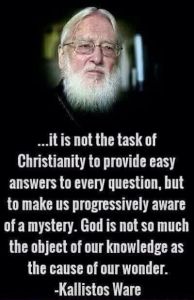
It seems as though the virus has given rise to many new questions.  So, I’ve been thinking a lot about questions…and answers.

QuoteMaster.org

There are new, virus-related questions, of course: When can we get back to normal life? Will a vaccine be forthcoming? Are masks effective? What will life be like post pandemic?  Somebody answer me!

Sometimes the questions are more urgent: How will I pay my rent?  Where will my next meal come from?  When can I visit my hospitalized loved one?  Somebody answer me!

And then there are really big questions, such as: What does it mean to be human?  Why am I here?  How can there be a good God who would allow such worldly horror?  Somebody answer me!

About my own questions, I remember saying years ago, When I get to Heaven I will have a lot of questions for God.  I said it with humor, but if I am honest I had the sincere expectation that God would submit to my demand once I stood face-to-face with him…and what I really meant was, God, you’ve got some explaining to do, and I‘m willing to listen to Your side before I judge You.

About questioning God, the curious thing for me is this: there is a written, historical record of quite a number of people who actually got to ask questions of God!  In the biblical Gospel accounts (Matthew, Mark, Luke, John) of Jesus, who is the God-man, when He walked the earth, people did ask Him  questions, and quite a lot of them according to Martin B. Copenhaver (Jesus is the Question).  During three-year period covered in the Gospels, the four writers record that people asked Jesus 183 questions.  He answered only 3.  ONLY 3! Worse yet, Jesus asked the people 307 questions.  

Yikes!…the thought of being questioned by God brings back my old “test anxiety” in a big way.  Seriously, though, the Gospel accounts seem to squash my idea of putting my most pressing questions to God and expecting answers.

Yet, does that mean I should have no questions for God?  Am I supposed to just have some sort of mindless “faith” in Him, afraid to ask anything for fear that He will turn the tables on me?

Here is a story.  In the Bible’s Old Testament, there was a wealthy family man named Job (rhymes with “robe”).  He had a wife, ten kids, and owned a very large ranch with thousands of head of livestock.  And, he was one of God’s favorite people.  In a single, tragic day rustlers stole all of his livestock and killed many of his herdsmen, and then a wind storm collapsed the house of one of his children killing all ten of them.  If that weren’t enough, Job himself was infected with painful boils.  In the days and weeks that followed, and as the shock of his loss began to wear off, Job had questions for God.  In page after page of the story, Job defends himself from friends who accuse him of having offended God and thus reaping due punishment.  Job continued to claim his innocence and began to insist in asking why this had happened to him.

Eventually, God appears before Job, but not to defend Himself from or explain Himself to Job.  You see, before Job can even open his mouth with his first question, God says, I will question you and you shall answer Me.  Then, like machine gun fire, God rattles off 67 questions for Job.  Questions like:

Where were you when I laid the foundations of the earth? Tell Me, if you have understanding. Who determined its measurements? Surely you know. Or who stretched the line upon it? To what were its foundations fastened, Or who laid its cornerstone, When the stars were made And all My angels praised Me in a loud voice?

On it goes.  Questions interspersed with sarcasm and facts.  I image Job cowering before God like Dorothy before the Wizard of Oz.

When God stops talking, Job has a sudden realization…I regard myself as dust and ashes, he says to God, please teach me.  Job’s questions are gone and he is beginning to be healed of his trauma.

But, how can he have such a rapid change of heart after enduring such trauma?  How could 67 questions bring that about?

Honestly, for a long while Job’s response struck me as remarkable to the point of incredulity. Had God simply responded to my questions with 67 of His own, I would have felt like I had been slapped down by a Bully.  My questions would metastasize into deep resentment toward or even hatred of God.  After all, I would silently rage, I didn’t ask to be born!  I didn’t ask for any of this!  I am tired of the unending battle against myself!  I am tired of living in this world!

Humanity’s questions are manifold and legitimate, they echo in the ears of my soul: Why was I…born into slavery, thrust into the horror of war, abused as a child, abused as a woman, subjected to repressive discrimination, falsely accused,?  Why did I…lose a child, lose a spouse, get this disease, have my dreams dashed, lose my life savings, become addicted, endure mental illness, lose my job, lose my home?  Why am I…so lonely, such a misfit, bullied, too different, trapped in a bad marriage, trapped in a dead-end job?  

More questions: Why did you bring me into this world, God?!  If you are everywhere and are all knowing, all powerful, and all loving, then why don’t you rescue me and fix this stupid world and those in it?!

Whether screaming, in laughter, in normal conversation tones, or in whispered weariness I have asked my own questions of God. 

Why, God?  It is the ultimate question.  I have come to know it is also a prayer.

So, how do I get to the point of beginning the healing that Job experienced? 

The late Catholic priest and writer Henry Nouwen (Spiritual Formation: Wisdom for the Long Walk of Faith) says this of our questions for God:

More often, as our questions and issues are tested and mature in [our] solitude [with God], the questions simply dissolve…God does not solve [all] our problems or answer all our questions, but [he] leads us closer to the mystery of our own existence where all questions cease. 

So, is that it?  Should I expect my questions to simply dissolve away with time and maturity as Nouwen suggests?  What about the hardship or trauma I may have experienced in this life that caused the questions…will that also simply dissolve, too?  No, something else must have happened to Job in his encounter with God to find the kind of contentment he confesses.

Back to Job’s story.  After God ends the questioning, Job says:

I have heard of You by the hearing of the ear, but now my eye sees You.

Job says he had heard of God.  That does not help me.  Who among us hasn’t heard of God.  But, what was different here is that Job also saw God.  Christian Orthodox tradition says that Job saw Christ Jesus.  Did he see the transfigured Jesus whose face shone like the sun? Or did he see the crucified Jesus hanging on the cross bearing Job’s pain and sin and the sin and pain of the world?  Whichever Jesus Job saw…God revealed Himself in the way Job needed to see so his questions would dissolve and he would began to be healed from the trauma.

In their encounter, God certainly gave Job truth: 67 questions and many statements of truth of who He is as God.  But, it wasn’t the hearing truth—God beating him about the head and shoulders with questions sarcasm—that dissolved Job’s questions and began his healing; rather, it was Job seeing the Beauty of God (Jesus) that helped him.  Truth by itself is like a sword that cuts us apart; only seeing Beauty—seeing God—can start us on the path of healing (Timothy G. Patatsis, The Ethics of Beauty).  Falling in love with God then becomes the path along which we journey to be healed.  

How do we see God like Job did?  He is all around us.  He may reveal Himself in a direct vision as He did with Job, the apostle Paul, and many, many others.  He may be seen as the Artist while sitting on that mountain top overlooking a scene that is too breathtaking to describe.  He may be seen as the crucified Christ in the healthcare worker sacrificing their safety during the pandemic.  He may be seen as the resurrected Jesus in the kindness of a friend who comforts.  He may be seen as the humble Jesus in the poor or in a visit to someone in prison.  He is all around us.

So, don’t be afraid of asking God questions.  Jesus was always gentle with honest questioners.  

The journey to dissolved questions is the journey of falling evermore deeply in love with God.  It is a matter for another time.  For now, be watchful.  Look for Beauty.  Look for God.

Image and Likeness

08 Monday Sep 2014

Posted by CurateMike in All, Humankind

≈ 1 Comment

Tags

Divine Dance, God, Holy spirit, image of God, Jesus, likeness of God, Theosis

Then God said, “Let Us make man in Our image, according to Our likeness…”
From the story of creation, Genesis 1:26

I’m sitting in a small beach house on the Gulf of Mexico and calling it work. Really, I am working…you will have to trust me on that. It is just that right now the work involves waiting on a client.

While I’m waiting I have these few minutes to enjoy God’s creation and to ponder what it means that we are made in God’s image and likeness.

Some biblical commentators have suggested that image and likeness are the same, that the writer of Genesis says the same thing twice and in two different ways to make the strong point of our value as humans.

I recently came across another explanation that I find more theologically satisfying.

“In the beginning…” as the Book says, God and the first humans were united; humankind was by Grace what God is by nature. All was “good” until our first parents fell for a lie. The consequence of their disobedience of God changed humanity; our respective natures, God’s and man’s, were no longer united. Without God’s Spirit within us we became bound to the dust out of which we were created rather than bound to our Creator. To speak like the late Carl Sagan, we became the stuff of the creation rather than the stuff of the Creator.

God’s words from Genesis 3:16–

For dust you are, and to dust you shall return.

Our union with God now broken, there was no way for us to remain in the Garden of Eden, the garden of perfect harmony with our Creator. We had to leave. It remained that way for us for untold years, and, left to our own devices, there was no way to return, no way to reunite human nature with Divine nature. Separation of our nature from God’s, and being nothing but dust, would have been our eternal fate had God chosen not to act on our behalf.

At the moment of our separation from Him he announced that He had a plan for our restoration to Him, a plan to rescue us from being bound to the dust which is the world. Then one day, over two thousand years ago, Jesus was born and God’s rescue operation was made evident in the person of a baby.

One of the central beliefs of Christianity is that Jesus was both God and man, both human and Divine. I think we so often focus on Jesus’ death that we forget the significance of His birth. At the moment of His conception and manifest in His birth, human nature and Divine nature were reunited. Jesus became, as the Bible tells us, the second Adam. This has the most profound implication for us! Because of His birth it became possible for each of us to be reunited with God. With the birth of Jesus, the potential now existed for us to return home.

This potential is how the early Church Fathers came to understand our being made in the “image” of God: it is the potential for our “sanctification,” for our two natures, God’s and ours, to be united (called Theosis). And it is this potential that gives us value as humans over any other living thing: we are created in the image of God. Each of us humans has the potential to have our individual nature united with God’s nature. There are some who would try to confer “personhood” on apes or dolphins or other creatures based on intelligence, language use, etc.; however, no other creature has the potential to be united with God; humans alone are created in the image of God.

With this understanding of “image,” here is a great quote from the late Archbishop Dimitri of Dallas I want to throw in at this point:

The greatest danger in the modern world is the attack on man as the image of God. That God became man in order to unite man to God is the only sure Divine underwriting of human worth. We have value because of the image we bear.

If this potential of united natures is “image of God,” then what is “likeness?” It is simple, really. If “image” is the potential of union with God, then “likeness” is the actualization of that union. To actualize the potential, we must do two things. First, we must give God permission to begin drawing us into His life.

There are a lot of fancy theological words bandied about regarding Christianity. The bottom line is that God wants to invite us into His life, an unimaginable life of unconditional love. The ancients characterized this communal life of God the Father, God the Son (Jesus), and God the Holy Spirit, as a Divine Dance (perichoresis). God draws us into His life and wants desperately to teach us the steps of the dance.

This, then, is the second thing we must do: we must learn to cooperate with Him as He teaches us how to live life with Him, to dance the Divine Dance. And He is a gracious and patient dance instructor.

The most remarkable thing is that God wants this for each of us. After all, it is God’s desire that no one should spend an eternity dancing alone, disunited from Him. However, not everyone wants that sort of union with God.

So, look around you. Every human being you see bears the image of God. From the most kind person to the most hated terrorist, every one of us is an icon, an image of the living God. Every human being has inestimable value to God. Imagine a world in which we treated each other that way. Better yet, imagine a world in which this potential is fully realized. One day we won’t have to imagine this actualized world…it is God’s promised kingdom come. I pray that by God’s Grace within me, I will see you there.

Choose Life

13 Thursday Mar 2014

Posted by CurateMike in All, Life

≈ Leave a comment

Tags

God, Holy spirit, homosexuality, hope, invitation, Jesus, Life, Love, Sin, Trinity

I call heaven and earth as witnesses today against you, that I have set before you life and death, blessing and cursing; therefore choose life, that both you and your descendants may live; that you may love the Lord your God, that you may obey His voice, and that you may cling to Him, for He is your life and the length of your days…

—Moses (Deuteronomy 30:19-20)

The debate over homosexuality is a hot-button issue about many things: moral right and wrong, human rights, love, happiness, natural law, the definition of marriage…

As important as these issues are, I don’t believe they should be the focus, at least not for Christians.  The debate over homosexuality should be a discussion about one thing and only one thing: what brings us life.

And this focus should apply not just to homosexuality but to all behavior, sexual and otherwise.

Here’s a question: Why did Jesus die for us?  If you have ever been to Sunday school or watched a sporting event you know about John 3:16—

For God so loved the world that He gave His only begotten Son [Jesus], that whoever believes in Him should not perish but have everlasting life.

Life.

Jesus said later in the same book of the Bible that He came so that we might “have life and life more abundantly.”  Sadly, that is not often the message of Christians.  Too often we reduce Christianity to a list of moral rights and wrongs rather than an invitation into abundant life with God.    We wag our fingers at Christians and non-Christians alike when we see what we believe is unbiblical behavior; we judge and scoff at and scold people for not being “good.”

When we reduce Christianity to a list of rights and wrongs we say that Jesus’ birth, life, death, and resurrection were God’s way of making bad people good.  Sadly, we turn God into some kind of supernatural Santa Clause who keeps a list of who has been naughty and nice and doles out eternal presents or lumps of coal.

Like many of you, I don’t want to worship that kind of god either.

But…what if Jesus’ death was not about making bad people good?  What if it was only about offering life to dead people?  If the latter is the case, then the Bible can be no longer viewed as Basic Instructions Before Leaving Earth; rather, through its stories God tells us and shows us the way that people fully alive with Him normally live, and Jesus’ life is the exemplar.  Further, the Bible shows us of God’s eagerness to be with us and the lengths He will go to help us to participate in His life.

Jesus didn’t come to make bad people good, Jesus came to offer life to dead people.

I know a little something about living without God—living as a dead person with my dead-person behaviors.  I wanted to be the master of my own universe, to fulfill all of my own desires.

I know from my own experience that dead people act out because they don’t know any better, it is simply “natural” for them to act this way.  You Christians sometimes got mad at me, but I didn’t know any better.  Rarely was I invited into life; rather, it was pointed out to me that I was acting badly.

It doesn’t matter whether the dead-person behavior born out of greed, pride, gluttony, power-mongering, anger, or lust (homosexuality or premarital heterosexual sex)—and the list goes on and on—dead people will naturally do the things of dead people.  Sure, dead people can perform good and great acts, too, but even those acts come from the vestiges of God’s morality since we are all made in His image and will not in and of themselves bring life to the dead.

Sin is not the things we do that are wrong, where “wrong” is defined as acting against biblical rules.  No.  Sin is our state of being separated from God.  When God calls us to turn to Him and  then to obey Him, He does so only because wants to unite us to Himself, He wants to bring us into a relationship with Him where we will find the abundant life He has for us; therefore, following His way for us to live is simply the way people fully alive in relationship with Him try to live their lives.

God is inviting us into the fullness of abundant life; He is not an all-powerful Killjoy…

God is inviting us into the fullness of abundant life; He is not an all-powerful Killjoy trying to ruin our fun and quench our desires.  Obeying God does not prevent us from enjoying life.  Quite the contrary!  Obeying God frees us to live the abundant life He wants for us.  We are oppressed only when we allow ourselves to be held captive by our attempts to satiate our own unbridled passions and desires.

This is the heart of the Bible message: God only wants for us to be our best, to be fully alive, to become the person He created us to be, which only occurs when we are in relationship with Him.  This is real Love, His for us.

But, participating in God’s life takes effort, just like any relationship worth having.  I must put forth effort into changing my old, dead-person habits for the sake of our relationship, relying on the power of God’s Holy Spirit within me to increasingly transform me over my lifetime into a person fully and abundantly alive and participating in His life.

Yes, I still battle many of my old, dead-person habits.  And lately, it seems, God has been unfailing in pointing out to me just how much I still act like a dead person.  Curiously, His pointing this out gives me hope because it reminds me of His love for me and that I can only find abundant life with Him.  And it helps me to have compassion for the still dead people and for other dead-acting Christians and makes me want to offer them the same hope I am finding with Him.

God is calling each one of us out of dead-person life and into a life fully alive with Him.  God is love and can only act toward us out of love; however, His love for us precludes Him from accepting something less for us that He has intended.

So, the choices in our lives, Christian and non-Christian alike, are not about right and wrong and who has the moral high-ground.  All of our daily choices of behavior really boil down to a single choice that we repeat every moment of every day: it is the choice between behaving as a human being alive with God or behaving as one dead and apart from God.

Respond to God’s invitation.  Choose life.

I call heaven and earth as witnesses today against you, that I have set before you life and death, blessing and cursing; therefore choose life, that both you and your descendants may live; that you may love the Lord your God, that you may obey His voice, and that you may cling to Him, for He is your life and the length of your days…

—Moses (Deuteronomy 30:19-20)

Perspectives

14 Wednesday Aug 2013

Posted by CurateMike in All, Self

≈ 3 Comments

Tags

Dietrich Bonhoeffer, false self, God, Holy spirit, Jesus, perspectives, shadow self, true self

Who am I?

Am I then really that which other men tell of?  Or am I only what I myself know of myself?

Who am I? This or the Other?  Am I one person today and tomorrow another?  Am Iboth at once?

—“Who Am I?”, Dietrich Bonhoeffer

Comedy-Tragedy

These questions so eloquently captured by Bonhoeffer have haunted me.

Have you ever had this thought: “If another person knew me, really knew me, they couldn’t possibly like me”?  You know the “real me” person I mean, the “inner you” that you go to great lengths to hide–yeah, that’s the one right there living in the shadow of the person you project–if they really knew that person they wouldn’t like you…or so you tell yourself because you know yourself better than anyone.

Have you ever had a really good friend tell you that they see good something in you that you know couldn’t possibly be true because, after all, you see the backstage areas of your life?  You nod at their comment in appreciation, perhaps even feeling a little flustered while protesting against their observation, while down deep wishing that what they said were indeed true.  What they say can’t be true, you tell yourself, because they don’t know the “real you,” and you, of course, know yourself better than anyone.on you project–if they really knew that person they wouldn’t like you…or so you tell yourself because you know yourself better than anyone.

Have you ever had some well-meaning fellow Christian tell you that God loves you for who you are?  You nod your head knowingly because it is a fact straight from your Bible; however, somewhere down deep you know it is a lie…after all, the “real you” is unlovable and, after all, you know yourself better than anyone.

What if you are wrong?  What if you aren’t the best judge of who you are.

What if you are wrong?  What if you aren’t the best judge of who you are.

What if there are other persons who know you at least as well as you know yourself and perhaps better than you know yourself?  I am coming to believe that there are three valid perspectives of me…

God’s Perspective

The first perspective is that of God.  If I am a follower of Jesus, then God has adopted me as His child.  To use the language of the Apostle Paul, God sees me-in-Jesus (Christ).  That’s a funny theological concept.  How can I be in another person?  Well, it is a bit of a mystery in the same way that two married people in a healthy marriage slowly and mysteriously become as one, their very persons separate but intertwined.

The practical outworking of this is that when God looks at me He sees me in the same way as He sees His Son, Jesus.  After all, I am His son, too (or daughter, ladies).  Imagine God looking at you that way.  And here’s the best part: He already knows about that shadowy person inside that I try to hide even from Him, and He still sees me as His most beloved child.

Sure, there’s a bit more to this perspective.  God wants me to really become like Jesus, so in addition to offering His unconditional love He helps me through His Holy Spirit to live my life in a way that I am being actually transformed into the likeness of Jesus.

Don’t get too bogged down in this extra stuff just now; the point is that God sees me as His child in the very same way He sees His real Son, Jesus.  God looks at me and sees me-in-Jesus.  That is His perspective.

Other’s Perspective

What about these other people who see something in me I don’t see.  Well, it is not just any other people that will see this truthfully.  It is too easy to fool the masses; with a few deft moves I can pull the wool over their eyes.  Or, they might see only a snapshot of me and rush to a good or poor judgment of me.

No, I’m talking about those very few people who really know me.  Those people I let into the innermost circle of my life; those to whom I tell of my hopes and dreams and expose my weakness and failures.  I hope you have a few people like that in your life.  These are the people who will see Jesus in you.  You cannot really know yourself without them.

As I draw closer to Jesus I become more like Him.  I am indeed a cracked pot, as they say, which is a good thing.  It is through those cracks that the light of Jesus shines through.  Jesus-in-me begins to shine through those very cracks in ways of which I am not aware unless someone else points them out to me.  This is what those closest to me begin to see.  And, it’s not really them seeing me differently; rather, it is Jesus-in-them seeing Jesus-in-me.

My closest friends look at me and see Jesus-in-me.  This is their perspective.

My Perspective

Then there’s my perspective.  Unfortunately, it is the one in which I put the most stock.  It is me looking at the backside of the tapestry of my life and seeing all the loose and knotted threads.  I see the mess behind the mask.  I hear the voices unkind toward you and me in my head.  I experience the doubts and fears of life.  I recognize the false bravado.

In other words, I see the sin in me.  I’m seeing the shadow person I think I hide because he is unlovable and if you or God knew him you would reject me and I’d rather die than be rejected for who I believe am.

In reality, this shadowy figure is not separate from me but is part of me.  As I draw closer to the light of Jesus I begin to see him more clearly for the wretched person that he is (I am).  He is (I am) not something to hide…he is who I really am: the person God has redeemed by the death of Jesus.  I’m seeing me-as-redeemed.  Having this view of me allows me to see God’s great mercy and grace toward me.  Sadly for us and for God’s kingdom we too often find our identity from this perspective alone.  We too easily dismiss ourselves as unworthy to do God’s work here.

The Apostle Paul is a good case study.  We know he is God’s son (perspective 1).  We know from his writings (two-thirds of the New Testament) that he was a great man of God (perspective 2).  Yet, he calls himself the chief of all sinners (perspective 3).

Each perspective offers me something.

God’s perspective gives me the deepest truth of who I am.  From His perspective I findmy ultimate identity, security, and significance.

The perspective of my friends gives me hope that God is at work transforming my life, that His promises are not empty promises.  I really am changing; my friends see it when I don’t.  Through the eyes of close friends I see who I am being transformed into.

My perspective reminds me of God’s grace and mercy as I see what I have been redeemed from.  I see the inner ugliness and it reminds me what God did for me through Jesus on the cross.  Out of this perspective I can begin to offer  God’s love to others.

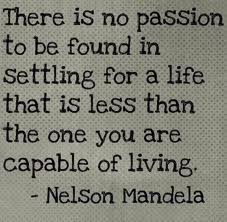
Mandella Quote

Each perspective is important.  Bonhoeffer finishes his poem with a reminder of the bedrock answer to the question, “Who am I?”:

Who am I? They mock me, these lonely questions of mine.  Whoever I am, Thou knowest, O God, I am thine!

The Kingdom of God is Like…

08 Monday Oct 2012

Posted by CurateMike in All, Ordinariness

≈ Leave a comment

Tags

G.K. Chesterton, Holy spirit, Jesus, kingdom of God, Ordinary

The kingdom of God is like…(Matthew 13)

  • Weeds mixed in with wheat, growing together until separated at the harvest;
  • A mustard seed that grows larger than the other plants;
  • A small portion of sour dough (leaven) that sours the rest of the dough;
  • Treasure found in a field, its is worth selling all one’s possessions to buy the field;
  • A pearl so valuable it is also worth selling all one has to buy it;
  • A large net that gathers all kinds of fish until they are sorted at the processing plant; or
  • Ten virgins awaiting a wedding, five who were foolish and five who were prudent (Matthew 25).

Theologian G.K. Chesterton, likens the movement of “orthodoxy” through history to the Church being

behind madly rushing horses, seeming to stoop this way and to sway that, yet in every attitude having the grace of statuary and the accuracy of arithmetic. The Church in its early days went fierce and fast with any warhorse; yet it is utterly unhistoric to say that she went merely mad along one idea, like vulgar fanaticism. She swerved left and right, so exactly to avoid enormous obstacles (Orthodoxy).

Israel’s King David (Psalm 29) describes God’s presence and voice–the King in His kingdom–as thundering over the waters, breaking cedar trees, striking like lightning, shaking the desert, twisting oaks, and striping forests bare.

Other writers have compared the kingdom to a ship at sea, not a cruise ship but a battle ship. We ought to come to church, says a writer whose name is now forgotten to me, not in our shorts and flip-flops with our umbrella drinks and chatting merrily, but in our battle gear: our helmets pulled down low over our eyes and our life preservers strapped on tightly with the “battle stations” klaxon blaring in our ears.

In my mind is this imagery: a bullet train. The train is moving fast, much too fast. Observers would say it is careening down the track. The normal, rhythmic clickty-clack of the wheels moving over the track now sounds like machine gun fire. With every imperfection in the track, around every turn the train feels like it will jump the track, hurling itself into space, turning itself into a twisted pile of scrap. The wide-eyed passengers are holding on for dear life, bodies covered in bruises, arms and legs straining to hold themselves secure against g-forces that work to pry them loose and toss them about like a favorite toy in the jaws of a playful puppy. Yet, the train, somehow, stays on the track.

All of this imagery captures my imagination, my heart pounds. The excitement. The danger of not being fully in control. Acts of great courage. The camaraderie in the adventure of being part of something bigger than any of us. The power of God on display in shock and awe…and yet.

Here I sit. My office is dimly lit. The quiet is broken only by the occasional voices of co-workers. Music plays softly in the office next door. Soon, I’ll be preparing another lesson for an upcoming class. Later, I’ll be sitting with someone, invited to enter into their story, listening to both them and the Holy Spirit. I’ve got to pay a few bills and set up a voice mailbox. Around me, people are still out work, some are homeless. A stranger smiles at another. A ten-year old girl is missing. A cancer patient gets a last wish. We over eat; much of the world starves. A soldier dies in Afghanistan. Two lovers are married. Iran and Israel trade threats. A prayer is answered. The civil war in Syria goes on. Infants are born, people will die; some will know Jesus, most will not have turned to Him. Today is like yesterday. Tomorrow is projected to be the same. The kingdom of God is also like this.

The ordinariness of my day is made more pronounced by the image of the bullet train careening through my mind.

Hope: Now and Not Yet

17 Monday Sep 2012

Posted by CurateMike in All, Hope

≈ Leave a comment

Tags

anger, God, hatred, Holy spirit, hope not-yet-being, Jesus, Josef Pieper, spirituality, theology, voices in my head

My foundational hope, the hope I have when all other hope is gone, is that all things in my life are brought about by God to bring me into the transformative union of likeness of God’s son, Jesus; this, of course, is through the power of the Holy Spirit, the personification of the loving relationship between Father and Son. (Of course, this assumes that I believe in God and have not strayed from following Him.) Further, one day I will be with God (God will be among us–Revelation 21:3) for all of eternity in the fully restored creation with no more death, mourning, crying, or pain. Ultimately, my hope is this: I will see God’s face and His name will be on my forehead (Revelation 22:4).

This is an extraordinary, ultimate hope. Frankly, it is beyond my comprehension (1Corinthians 2:9). It is the very definition of hope: longing for the ultimate good, the yearning that seems to be within each of us for the not-yet-being. But…what about now? The world today is filled with so much anger, pain, greed, self-centeredness, intolerance (even in its best definition), unhappiness, the list goes on-and-on. In my own world I often seem trapped inside this body that is wracked with selfishness; voices in my head, mine and others, condemn me. In my own pain I cause pain for others.

Regarding my world, it is becoming increasingly easy for me to find ordinary hope–the hope found in day-to-day living. The idea that God is drawing me into a deeper loving relationship with Him and through this love is transforming me into the likeness of Jesus is compelling. I have such a clear image/feeling in my soul of what that relationship will be like that I am increasingly willing to endure anything to experience it. Sure, I have my attention diverted from time-to-time; however, as quickly as I can refocus on the goal–relationship with Christ–then my hope returns. I have the great ordinary hope that in Jesus I am already the child of God that I am becoming.

Finding ordinary hope for the world around me is harder. Sure, I can look at the world and know that one day it will be restored and all the hardship and death will be gone; my foundational hope for the world is nicely intact. But for today…where can I find ordinary hope as I read the newspaper? I don’t think I can apart from my own ordinary and foundational hope with God.

I’m not particularly given to progressivism (theological postmillennialism), believing that the world–its human inhabitants–will get better as history proceeds. History simply doesn’t seem to support that view. So, what should I make of this world? My head tells me that given the design constraints (i.e., God wants a loving relationship with humans with free will), this is the best possible world God could have created to ensure the most (but not the majority–Matthew 7:13-14) of us fall in love with Jesus; any other created world would result in even fewer entering into an eternal life of knowing God (John 17:3). I also know that God is active in this world in His way.

I know that some try to find ordinary find hope in the perceived security of a large 401(k), or the markets (stocks, bonds, gold, commodities, etc.), or a good job, or the green movement. Some try to numb their lack of hope with drugs or alcohol or cutting; for others, the drug of choice is distraction by cars, boats, big homes, travel, busy lives, multiple sexual partners, etc.

Apart from God I cannot see any ordinary hope for this world. Certainly not all of the things in the paragraph above are bad if experienced rightly within their proper context; however, none can provide hope as defined as moving toward the ultimate good, becoming better, progressing as not-yet-beings as the ancients defined hope. At best these things are temporal, failing to provide any real hope. I think we humans are quite resourceful in the ways we concoct to find ordinary hope in the face of the reality of this world.

The only hope, ordinary and foundational, that I can find for myself and the world around me is the hope of knowing Jesus (Philippians 3:7-16). If this is true, then maybe we Christians should stop shouting, “Thou shalt not…” at the world, being just another shrill voice in the din of angry voices in a world full of hate. Just maybe we ought to offer a positive voice asking the gentle question, “Where do you find hope?” But we need to know just where we find our own hope so that we can offer t freely to others (2Peter 3:15).

I’m going to begin asking people this question, where do you find hope? I’ll let you know how it goes.

Newer posts →

Enter your email address to follow this blog and receive notifications of new posts by email.

Join 87 other subscribers

Recent Posts

  • Bedrock
  • Healing by Fire
  • I Can Only Imagine
  • Defending Myself
  • A Lesson From Leroy

Categories

Archives

Blogs I Follow

  • O'Byrne Report
  • Spirituality and Nature

Credits

  • Desert Photo

Blog at WordPress.com.

Privacy & Cookies: This site uses cookies. By continuing to use this website, you agree to their use.
To find out more, including how to control cookies, see here: Cookie Policy
  • Subscribe Subscribed
    • curacy
    • Join 87 other subscribers
    • Already have a WordPress.com account? Log in now.
    • curacy
    • Subscribe Subscribed
    • Sign up
    • Log in
    • Report this content
    • View site in Reader
    • Manage subscriptions
    • Collapse this bar
 

Loading Comments...